


 English
 한국어
한국어 français
 Deutsch
 русский
 português
 العربية
 tiếng việt
 ไทย
ไทย Polska
 Nederland

Choosing the Right Steel Fibers for Concrete Reinforcement
Concrete is one of the most widely used construction materials in the world, valued for its compressive strength, durability, and versatility. However, traditional concrete has a major limitation: it is weak in tension and prone to cracking. To solve this issue, engineers increasingly use steel fibers for concrete reinforcement to improve structural performance, crack resistance, and long-term durability.
Today, steel fiber reinforced concrete is widely used in industrial flooring, tunnels, precast concrete, bridge decks, airport pavements, mining projects, and high-performance infrastructure. Compared with traditional reinforcement systems, steel fibres offer better crack control, reduced maintenance, and faster construction efficiency.
This article explores everything you need to know about steel fibre reinforcement, including properties, benefits, applications, comparison with traditional reinforcement methods, and how to choose the right steel fibre for your project.
What Are Steel Fiber Reinforced Concrete?
Steel fiber reinforced concrete (SFRC) is a type of concrete that contains uniformly distributed steel fibres within the concrete mix. These fibers act as micro-reinforcement elements that improve the mechanical and structural properties of concrete.
Unlike conventional reinforcing bars or welded wire mesh that reinforce concrete only in specific directions, steel fibers are distributed throughout the concrete matrix, providing multidirectional reinforcement.
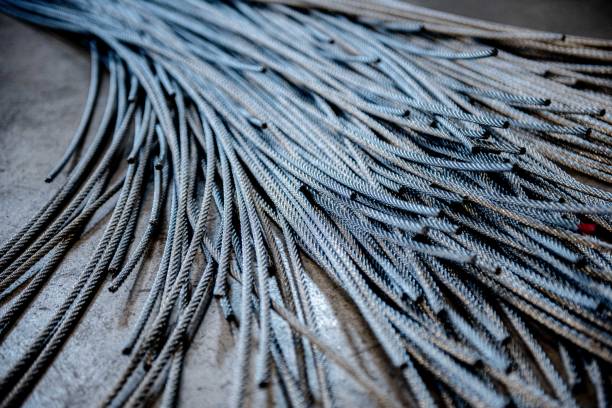
Benefits of Steel Fibers for Concrete Reinforcement
The growing popularity of steel fibers for concrete reinforcement comes from the wide range of performance and economic advantages they offer.
Reduced Cracking
Steel fibres distribute stresses evenly across concrete, significantly reducing crack width and crack propagation.
Faster Construction
Using steel fibers can reduce or eliminate the need for traditional mesh reinforcement, speeding up construction timelines and reducing labor costs.
Lower Maintenance Costs
Improved durability and crack resistance reduce long-term repair and maintenance expenses.
Better Load Distribution
Steel fiber reinforced concrete distributes loads more evenly, improving overall structural behavior.
Improved Fire Resistance
Micro steel fibers are commonly used in tunnel linings and high-performance concrete to minimize explosive spalling during fire exposure.
Cost Efficiency
Although the initial material cost may be higher, the total installed cost is often lower because of reduced labor, faster installation, and lower maintenance requirements.
Steel Fibers vs Traditional Reinforcement Methods
Both steel fibers and traditional reinforcement systems have advantages, but their performance differs depending on project requirements.
| Comparison Factor | Steel Fibre Reinforcement | Traditional Rebar/Wire Mesh |
|---|---|---|
| Crack Control | Excellent multidirectional crack control | Localized reinforcement |
| Installation Speed | Fast and efficient | Labor-intensive |
| Labor Cost | Lower | Higher |
| Structural Ductility | High | Moderate |
| Distribution | Uniform throughout concrete | Fixed placement |
| Construction Time | Reduced | Longer |
| Maintenance | Lower | Higher risk of localized cracking |
| Best Applications | Floors, tunnels, pavements | Heavy structural beams and columns |
In many modern projects, contractors combine traditional reinforcement with steel fibres to maximize structural performance.
How to Choose the Right Steel Fiber for Concrete?
Choosing the correct steel fibre is essential for achieving optimal performance.
Consider the Application
Different projects require different steel fiber specifications.
| Application | Recommended Steel Fiber Type |
|---|---|
| Industrial flooring | Hooked-end steel fibers |
| Shotcrete and tunnels | Micro steel fibers |
| Precast concrete | Straight steel fibers |
| Airport pavements | Crimped steel fibers |
| UHPC | High-strength micro fibers |
Fiber Aspect Ratio
The aspect ratio refers to fiber length divided by diameter. Higher aspect ratios generally improve reinforcement performance but may reduce workability.
Typical aspect ratios range from 40 to 80.
Concrete Mix Compatibility
The steel fiber must be compatible with the water-cement ratio, aggregate size, and admixtures used in the concrete mix.
Tensile Strength Requirements
Projects with heavy loading conditions often require high tensile strength steel fibres.
Corrosion Environment
For marine, chemical, or humid environments, stainless steel fibres may provide better durability.
Supplier Quality and Certification
Always work with reliable steel fiber suppliers such as Star Smith, which can provide:
Stable product quality
International certifications
Consistent tensile performance
Technical support
Reliable global supply capability
Choosing an experienced supplier is critical for ensuring long-term concrete performance.
FAQs
1. What industries use steel fibre reinforcement?
Steel fibre reinforcement is widely used in construction, mining, transportation infrastructure, precast manufacturing, industrial flooring, tunnel engineering, airport construction, and marine projects.
2. Can steel fibers completely replace mesh reinforcement?
In some slabs, pavements, and industrial floors, steel fibers can partially or fully replace welded wire mesh depending on engineering design requirements.
3. Are steel fibers suitable for high-performance concrete?
Yes. Steel fibers are widely used in UHPC (Ultra-High Performance Concrete) and other high-strength concrete systems.
Conclusion
The use of steel fibers for concrete reinforcement has transformed modern concrete technology by significantly improving crack resistance, toughness, durability, and structural performance.
Compared with traditional reinforcement systems, steel fiber reinforced concrete offers faster installation, lower maintenance costs, improved impact resistance, and superior long-term performance. From industrial floors to tunnels and infrastructure projects, steel fibres have become an essential reinforcement solution in modern construction.
To achieve the best results, contractors and engineers should carefully select the appropriate fiber type, dosage, and supplier. Partnering with experienced steel fiber suppliers such as Star Smith helps ensure consistent quality, technical support, and reliable project performance.